

The Screen Time Limited Hangout
Protecting Our Children Requires More Than Taking Away the Screen

The term limited hangout originated in intelligence circles. It refers to a strategy in which an organization admits part of the truth—often enough to establish credibility or relieve pressure—while withholding, redirecting attention from, or obscuring the more significant facts. The partial disclosure becomes a means of controlling the broader narrative.
Old news, really—this exposé of how children’s brains, and potentially their subsequent abilities, are diminished in association with “screen use.”
Professor John S. Hutton’s research on the subject appeared in JAMA Pediatrics in 2019, reporting an association between greater screen use and lower measures of white-matter integrity in brain pathways supporting language, executive function, and emerging literacy in preschool-aged children. The findings, then, are shocking but hardly breaking news.
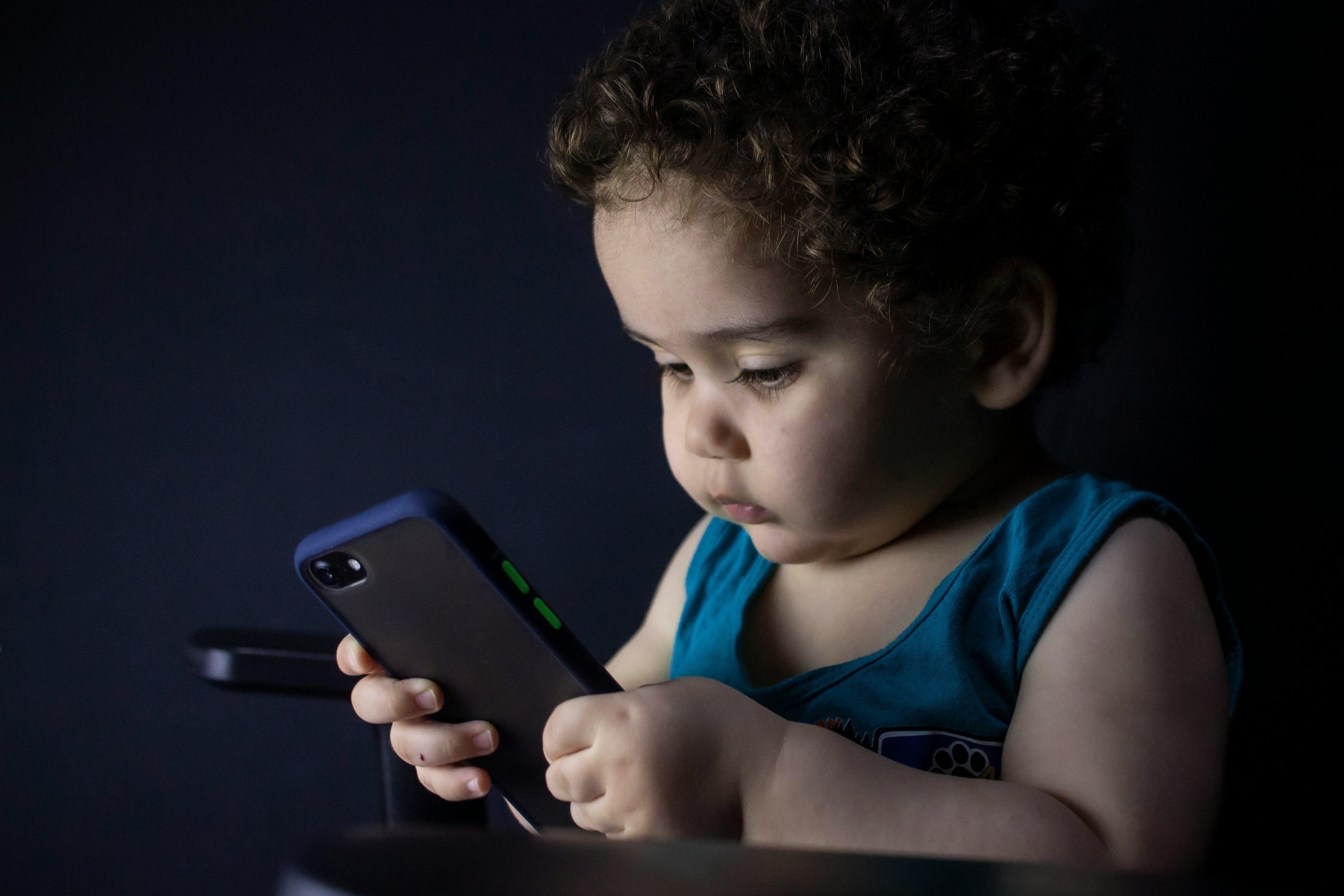
Photo by Hessam Nabavi, unsplash.com
“The press may not be successful much of the time in telling people what to think, but it is stunningly successful in telling its readers what to think about.”
— Bernard C. Cohen (1963)
What is new is seeing a major television network say it in 2026. I want to know why.
My question is why a tentacle of mainstream television media is now, at least partially, exposing the problem.
The special report was broadcast by 10 News on Australia’s Network 10—part of Paramount, ultimately controlled through a voting structure dominated by the Ellison family, Larry and David Ellison.
So what’s really going on here?
Are we finally winning the information battle? Has the evidence become too substantial, the consequences too visible, and public concern too widespread for mainstream media to continue ignoring the damage associated with smart-device technologies?
Perhaps.
But there is another possibility worth considering.
Sometimes the most effective way to control an emerging truth is not to deny it, but to acknowledge just enough of it to establish credibility while defining, very carefully, what that truth is allowed to mean.
And that is what makes this report so interesting.
It tells us something is wrong. It tells us children are suffering. It shows us disturbing changes in their brains. It points to the smartphone revolution and graphs the extraordinary deterioration in measures of childhood and adolescent well-being that followed. It even compares what we are witnessing to the decades during which the dangers of cigarettes were minimized.
That is an extraordinary amount of truth for mainstream television.
But then comes the enclosure: the problem is “screen time.”
Too much looking. Too much scrolling—that’s it.
The solution therefore becomes equally predictable: limit the time.
But what if “screen time” describes an exposure without identifying everything contained within that exposure? A child holding a modern connected device is not merely looking at a screen. Behavioral stimulation, content, blue light, displacement of human interaction, disrupted sleep, sedentary behavior, and exposure to the electromagnetic emissions necessary for wireless connectivity are bundled together into the same experience.
Yet many of those variables—and electromagnetic emissions in particular—remain conspicuously outside the discussion.
And that omission matters, because “screen time” confines the problem to something parents can supposedly control: take away the tablet, restrict the phone, turn off the television, establish limits. But electromagnetic exposure doesn’t always end when the screen goes dark—even turned off.
Children are now immersed in wireless environments they cannot escape. Wi-Fi has become standard infrastructure in both homes and schools. Uninformed parents use baby monitors, wireless access points, laptops, tablets, interactive displays, phones, watches, security systems, smart appliances and other devices that radiate around them throughout the entire day.
And most parents don’t even know consider it. Screens bad, a 24/7 sea of unnatural radiation—not a concern.
They were never taught electromagnetic hygiene. They were never taught that wireless communication requires electromagnetic radiation; that devices can often be hardwired instead; that unnecessary wireless functions can be turned off; that distance matters; that transmitters need not be placed beside beds, beneath desks, or directly overhead; or that a child’s electromagnetic environment might deserve the same deliberate consideration we increasingly give to clean food, water, and air.
The vast majority have no idea how much RF radiation exists in their own homes—much less the levels of electric fields, magnetic fields, contact current, or dirty electricity to which their families may be exposed. These are environmental conditions most people have never measured, never been taught to measure, and rarely even recognize as variables.
So a parent can watch this report, become genuinely alarmed, restrict a child’s “screen time,” remove the tablet at dinner, keep the phone out of the bedroom—and reasonably believe the problem has been addressed even while the devices continue to pollute the home with RF radiation.
The child may continue to dwell in a foreign EMF environment—never proven in any realistic way to be without harm, from which they have no escape.
That is a consequence of defining the problem too narrowly.
Are we being given enough truth to recognize the problem, while simultaneously being given a frame narrow enough to prevent us from asking what else might be causing it?
Are we winning the information battle?
Or are the boundaries of the information battle simply being redrawn?
Either way, waiting for mainstream media to accurately define the problem—or tell us how to respond to it—isn’t a strategy I’m willing to recommend.
If you want to learn how to begin protecting your own family, there is much you can learn. Begin by recognizing that the synthetic electromagnetic environment exists, that it can be measured, and that unnecessary exposures can often be identified and reduced.
But perhaps you want to go further.
Perhaps you want to acquire the knowledge, instruments, and practical skills necessary not only to better understand your own environment, but to help others understand theirs.
I have one seat remaining in my next five-day EMF Consultant Training, September 14–18. This is hands-on training in the assessment and remediation of real-world electromagnetic environments, intended for those who want to develop the practical skills necessary to serve their families, their communities, or eventually their own clients.
If something in you says this might be work worth learning, open a conversation with me. There’s no obligation. We can talk about what you hope to accomplish, what the training involves, and whether this particular opportunity might be a good fit for you.
One seat remains. If you think it might be yours, reach out.
Great article Keith. Thank you. I sent this article to Jonathan Haidt's office. He's author of The Anxious Generation. He didn't get the "memo" on the dangers of wireless radiation. He was interviewed on NewsNation recently wearing wireless ear buds. He's also been interviewed on Moody Christian Radio. He's close to the problem, but he misses the mark and I also wonder if it's possibly intentional as wireless seems to be a taboo topic for mainstream folks. ?? A few years ago I wrote to Dr. Lee Warren, neuroscientist and author, sending him troves of EMF info. His reply: "thanks". Oh well. All we can do is continue to throw out seed and eventually it will fall on 'good soil."
Very well said Keith. I do think that this level of awareness can at least be a doorway to possible further understanding, especially with mothers. A mother loves, cares about and wants to protect her children. Beginning with concern over screen time, there can be a crack for the light to get in. One friend of mine uses the term "screenagers" and doesn't allow her 11 year old daughter to have a cell phone. They may both soon be living on our property where we have no wifi or cell phone use. I'm thinking it will be a great opportunity to share more with her.